Hearts and Hearts and Flowers Watercolor Collection: A Practical Guide to Usage and Quality
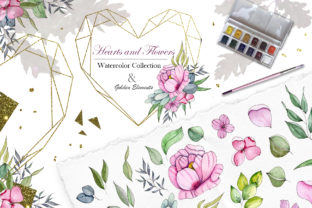
When selecting digital assets for romantic or sentimental projects, the visual quality of your source material dictates the success of the final product. The Hearts and Flowers Watercolor Collection offers a comprehensive suite of botanical and geometric elements designed specifically for high-resolution print and digital media. This collection is not merely a set of decorations; it is a foundational toolkit for creators who need versatility across invitations, Valentine’s Day cards, DIY crafts, greeting cards, blogs, quotes, posters, packaging, wrapping paper, and stickers. However, owning these files is only the first step. Understanding how to leverage the specific technical attributes of this clipart collection ensures that your unique products maintain professional standards rather than looking like generic template outputs.
Many designers and hobbyists underestimate the importance of resolution and file organization when working with watercolor assets. A common oversight is assuming all "high resolution" claims are equal. In this collection, every element is rendered at 600dpi. This specification is critical because standard web images often sit at 72dpi or 96dpi, which appear pixelated when printed on cardstock or packaging. If you attempt to upscale a lower-resolution flower for a poster or wrapping paper, the edges will blur, and the delicate watercolor texture will be lost. By utilizing the native 600dpi files provided here, you preserve the authentic bleed and grain of the original paint, which is essential for creating believable, organic designs.
Avoiding Composition Pitfalls with Pre-Made Elements
One frequent mistake users make with floral clipart is forcing individual elements into unnatural arrangements. While the Hearts and Flowers Watercolor Collection includes 20 different watercolor flowers and leaves illustrations as standalone PNG files, it also provides five ready-to-use floral compositions. Beginners often ignore these pre-arranged compositions, spending hours trying to manually layer single stems to create balance. This manual layering can result in flat, two-dimensional-looking bouquets that lack the depth of real watercolor painting.
The better approach is to use the five ready-to-use compositions as anchors for your design. These have been arranged by an artist to ensure proper shadowing, overlap, and color harmony. You can then supplement these base arrangements with the individual flower and leaf PNGs to extend the design or customize it for specific dimensions. This hybrid method saves time and guarantees a professional aesthetic. Additionally, the collection includes three different ready-to-use floral golden hearts and one additional round golden shape with a flowers heart. These complex, multi-layered elements are difficult to replicate manually. Utilizing them as central focal points for invitations or greeting cards prevents the design from feeling disjointed.
Understanding File Formats and Transparency
Another area where efficiency is often lost involves misunderstanding file formats. This collection delivers all assets in ONE ZIP file, containing both PNG and JPG formats. A significant error occurs when users default to JPG files for layered designs. JPGs do not support transparency; they render transparent areas as white boxes. If you place a JPG flower over a colored background or a patterned wrapping paper design, you will be stuck with an unsightly white border that requires tedious masking to remove.
Always prioritize the PNG files for any project involving layering, such as stickers, blog headers, or card overlays. Reserve the JPG files specifically for the two seamless patterns included in the set. Since these patterns (sized at 3000x3000px) are intended to be used as full backgrounds for wrapping paper or digital scrapbooking, the JPG format is appropriate and often results in smaller file sizes for web use. Checking the file extension before importing into your design software prevents workflow interruptions and ensures clean edges on every element.
Leveraging Golden Accents Without Overcrowding
Metallic elements add luxury to watercolor designs, but they are easily misused. The Hearts and Flowers Watercolor Collection includes substantial gold assets: three golden hearts, one golden round frame, and two additional triangle golden shapes. A common design failure is treating these gold elements as mere fillers rather than structural components. Placing gold accents randomly can make a design look cluttered or cheap.
Instead, treat the golden round frame as a container for typography or photography. It provides a defined boundary that organizes the layout. Similarly, the two triangle golden shapes serve as excellent directional cues or corner anchors, guiding the viewer’s eye toward the main message. When creating Valentine’s Day cards or special day invitations, let the gold elements define the hierarchy of information. Because these are high-resolution PNGs, they retain the shimmer and texture necessary for realistic metallic effects. Scaling them down too aggressively can diminish this effect, so plan your layout to accommodate their intended size.
Creating Unique Patterns and Products
For entrepreneurs and small business owners creating sellable goods like wrapping paper or stickers, uniqueness is paramount. Relying solely on the provided seamless patterns limits your product line. The true value of this collection lies in combining the 20 individual flowers and leaves with the geometric gold shapes to generate proprietary patterns. Many users overlook the triangle and round gold shapes when pattern-making, focusing only on florals. Integrating these geometric forms breaks up the organic repetition of flowers, creating a more sophisticated, modern textile design.
Furthermore, when designing for print-on-demand or commercial packaging, verify that your canvas size aligns with the 3000x3000px pattern tiles. Stretching a pattern non-proportionally distorts the floral anatomy. Always scale proportionally or use the pattern tool in your design software to tile the image correctly. This attention to technical detail distinguishes a premium product from an amateur craft project.
Technical Verification Before Purchase and Use
Before integrating the Hearts and Flowers Watercolor Collection into a commercial workflow, perform a quick audit of your software capabilities. Ensure your program supports 600dpi PNG files without automatic compression. Some basic online editors automatically downgrade uploaded images to save server space, negating the high-quality advantage of this collection. Working in professional-grade software or verifying export settings is necessary to maintain the integrity of the watercolor textures.
Additionally, consider the end-use licensing and application. While this collection allows for the creation of unique products, understanding the distinction between using the raw files versus creating a new derivative work is vital. You cannot simply resell the PNG files as they are. However, by combining the floral compositions, gold frames, and individual leaves into a new invitation suite or sticker sheet, you are creating a unique product. This distinction protects your business and respects the intellectual property of the asset creator.
Finally, organize the unzipped files immediately upon download. With over 30 distinct elements ranging from standalone flowers to complex frames, a chaotic folder structure leads to wasted time. Create subfolders for "Individual Botanicals," "Gold Elements," "Compositions," and "Patterns." This simple organizational habit streamlines the creative process, allowing you to focus on design rather than file management. By approaching the Hearts and Flowers Watercolor Collection with technical awareness and strategic intent, you transform a set of digital files into a reliable engine for beautiful, market-ready creations.