Simple Valentine Botanical Leaf Wreath S: A Practical Guide to Using Hand-Drawn Clipart
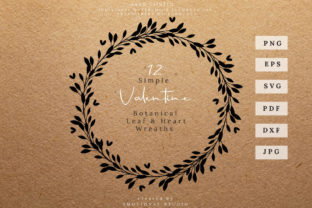
The appeal of the Simple Valentine Botanical Leaf Wreath S collection lies in its versatility and organic aesthetic. For creators ranging from wedding stationers to DIY branding enthusiasts, having access to twelve distinct hand-drawn leaf plant and branch wreaths offers a foundation for elegant, minimal design. However, owning high-quality assets in EPS, DXF, SVG, PNG, PDF, JPG, and AI formats is only the first step. The difference between a polished final product and a frustrating design experience often comes down to understanding file hierarchy, resolution management, and color correction workflows.
Many designers and crafters overlook the technical nuances of botanical clipart, assuming that all digital files behave identically. This assumption frequently leads to pixelated prints, incompatible cutting machine errors, or hours wasted trying to recolor flattened images. By addressing these common pitfalls early, you can maximize the utility of this circular wreath collection and ensure your projects maintain that dreamy, natural feel without technical compromise.
Selecting the Correct File Format for Your Medium
One of the most frequent mistakes occurs when users default to raster formats like JPG or PNG for projects that require scalability. While the Simple Valentine Botanical Leaf Wreath S package includes 300ppi raster files perfect for web use or standard printing, they are not suitable for large-format signage or resizable logos. If you attempt to stretch a 12x12 inch PNG beyond its native dimensions, the hand-drawn lines will soften and blur, destroying the delicate botanical detail.
For any project involving resizing, professional printing, or vinyl cutting, you must utilize the vector files included in the zip. The SVG, DXF, EPS, and AI formats contain mathematical path data rather than pixels. This means you can scale a wreath from a business card size to a storefront banner without losing crispness. Beginners using Cricut or Silhouette machines should specifically prioritize the SVG or DXF files, as these preserve individual layers and cut lines better than converted rasters. Always verify your software’s compatibility before starting; while AI files offer the most editability in Adobe Illustrator, SVG remains the universal standard for broader accessibility.
Avoiding Color Correction Errors in Raster vs. Vector
Customizing the color palette is essential for matching specific wedding themes or brand guidelines, yet many users apply the wrong editing technique for their chosen file type. A common error involves trying to recolor a black-and-white JPG using paint bucket tools or overlay layers. This results in muddy edges and destroys the transparency required for layering over textured backgrounds.
If you are working with the transparent PNG or JPG files at 300dpi, avoid painting over the artwork. Instead, use the Hue/Saturation slider in Photoshop or similar raster editors. Because these files are high-resolution and isolated on a transparent background, adjusting the hue preserves the original hand-drawn texture and line weight while shifting the tone cleanly. Conversely, if you need precise Pantone matching or CMYK separation for professional offset printing, rely on the editable EPS, PDF, or AI files. In Adobe Illustrator, you can select individual anchor points or paths to change colors directly. This vector-based approach ensures that your "rustic green" remains consistent across every invitation suite element, something that is nearly impossible to achieve perfectly with raster adjustments alone.
Managing Resolution and Print Clarity
Even experienced designers sometimes misjudge resolution requirements. The included 12x12 inch 300dpi files are industry standard for stationery, but they have physical limits. If you are designing an arch backdrop or large wall decal, a 300dpi raster file will appear jagged when printed at 24 inches or larger. Users often discover this too late, after sending files to print, resulting in costly reprints and missed deadlines.
To prevent this, always check the intended output size against the file’s native dimensions before beginning your layout. For large-scale applications, open the EPS or AI file and resize it to your exact specifications before exporting. Vectors do not suffer from resolution loss, making them the only safe choice for oversized botanical elements. Additionally, ensure your document color profile matches your output device. Screen previews can be deceiving; a vibrant green on an RGB monitor may print as a dull olive in CMYK. Utilizing the provided PDF vector files can help bridge this gap, as PDFs often embed color profiles more reliably than standalone SVGs when transferring between different design ecosystems.
Understanding Layer Structure and Editability
Not all botanical wreaths are created equal regarding editability. A significant frustration arises when users download a "vector" file only to find it is merely a raster image embedded within an EPS container. This prevents true editing. With the Simple Valentine Botanical Leaf Wreath S collection, the inclusion of native Adobe Illustrator CC and AI 10 files guarantees genuine vector paths. However, users must still understand how to navigate these layers effectively.
Before purchasing or downloading, verify that the description confirms editable paths rather than traced images. When working in Illustrator, check the Layers panel to ensure the wreath elements are grouped logically. Some hand-drawn assets come as thousands of unorganized anchor points, making selection difficult. Fortunately, well-structured botanical clipart allows you to isolate specific branches or leaves to create custom arrangements. If you only use the flattened PNG versions, you lose the ability to tuck text behind specific leaves or rearrange the foliage density. Taking five minutes to explore the vector structure can save hours of manual masking later.
Evaluating Style Consistency Across Projects
When building a cohesive brand identity or wedding suite, mixing disparate artistic styles creates visual dissonance. A common oversight is pairing these specific hand-drawn, minimal leaf wreaths with overly ornate, digital-paint florals or rigid geometric vectors. The charm of this collection is its organic, sketch-like quality. Introducing conflicting aesthetics can make the final design look disjointed rather than curated.
Maintain stylistic integrity by testing combinations before committing. Place the botanical wreath next to your chosen typography and secondary graphics. Does the line weight of the hand-drawn branches complement the stroke width of your font? If the wreath feels too heavy or too light compared to other elements, adjust the stroke width in the vector file rather than switching to a completely different art style. The twelve variations in this set provide enough diversity to handle hierarchy—using denser wreaths for main headers and sparser branches for footnotes—without breaking the visual language. Consistency builds trust and professionalism, whether you are selling digital downloads or designing for a client.
Best Practices for File Organization and Licensing
Digital asset management is often an afterthought until a file goes missing mid-project. With a zip containing over 60 individual files across multiple formats, proper organization is critical. Extract the entire archive immediately upon download and sort files into subfolders labeled by format or project use. Renaming files to include descriptive tags (e.g., "Valentine_Wreath_Eucalyptus_SVG") prevents confusion when searching through generic filenames months later.
Finally, always review the licensing terms associated with botanical clipart. While these files are excellent for commercial stationery, logo creation, and DIY branding, restrictions may apply to reselling the raw digital files or using them in trademarked logos. Understanding these boundaries protects your business from legal issues. Treat these assets as foundational elements to be integrated into unique designs rather than standalone products. By respecting both the technical specifications and usage rights, you ensure that the Simple Valentine Botanical Leaf Wreath S collection serves as a reliable, long-term resource for your creative endeavors.