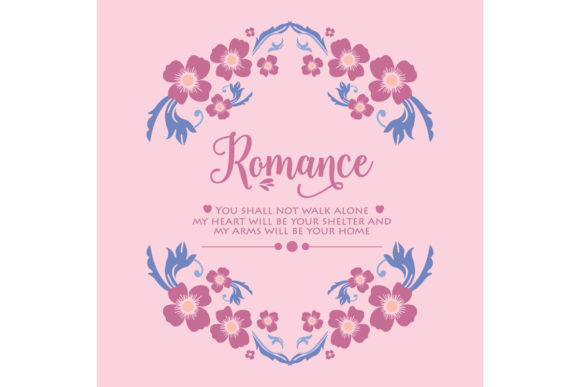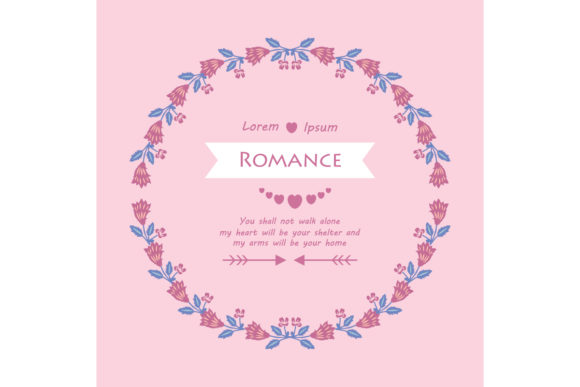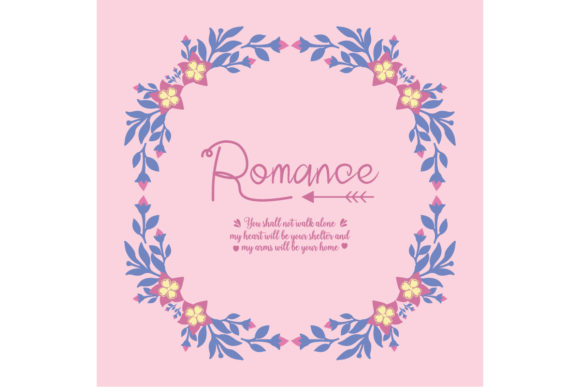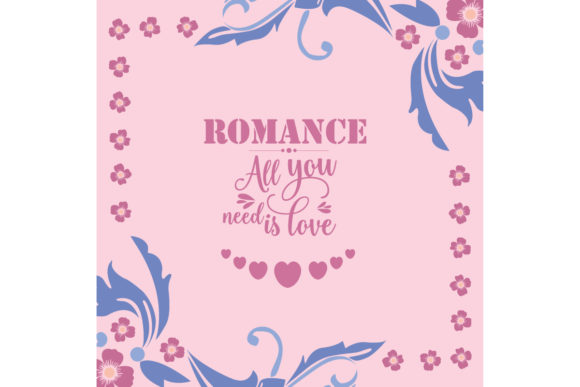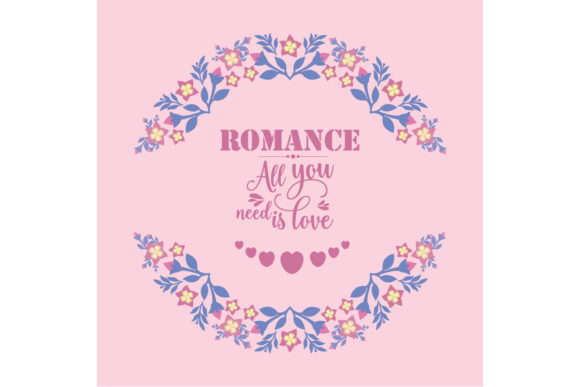
Template Design for Romance Card Design: Strategic Application of Cute Floral Vector Assets
Effective visual communication in the greeting card market requires balancing aesthetic appeal with operational efficiency. When professionals approach Template Design for Romance Card Design, they are not merely selecting a pretty background; they are establishing a scalable system for emotional engagement. The specific niche of cute leaf and floral frame vector illustrations offers a unique strategic advantage. Unlike photographic realism, which can sometimes feel too specific or dated, stylized vector art provides a timeless, adaptable foundation that resonates across diverse demographics. For entrepreneurs, marketers, and creators, understanding the functional architecture behind these templates transforms them from simple decorative elements into powerful tools for brand consistency and product development.
The Strategic Value of Stylized Vector Frameworks
The decision to utilize a cute style of leaf and floral frame is often dismissed as purely subjective, yet it carries significant weight in positioning. In the context of Template Design for Romance Card Design, this aesthetic serves as a psychological cue. Soft, organic lines and botanical motifs signal gentleness, sincerity, and approachability. For businesses operating in the wedding, anniversary, or Valentine’s Day sectors, this visual language reduces friction between the sender's intent and the recipient's perception. It creates a safe, universally positive container for personal messages.
From an operational standpoint, vector-based templates offer superior flexibility compared to raster graphics. A well-constructed template allows for infinite resizing without quality loss, ensuring that a design created for a standard 5x7 greeting card can be seamlessly adapted for social media squares, email headers, or large-format posters. This scalability is critical for freelancers and small business owners who must maximize the return on investment for every asset created. By anchoring your workflow in high-quality vector templates, you reduce production time while maintaining professional standards across all touchpoints.
Aligning Visual Assets with Business Goals
Before integrating floral frames into your production line, it is essential to define the specific objective. Random application of cute aesthetics can dilute brand authority if not aligned with broader goals. Consider how Template Design for Romance Card Design supports your current priorities:
- Brand Consistency: Establishing a signature color palette within the vector layers ensures that every romance card reinforces brand recognition, even when the specific message changes.
- Product Line Expansion: Modular floral frames allow for rapid iteration. A single master template can spawn dozens of SKU variations by simply adjusting layer visibility or hue, facilitating faster time-to-market for seasonal collections.
- Customer Experience: Thoughtful negative space planning within the frame ensures legibility and ease of writing, directly impacting user satisfaction and perceived value.
- Operational Efficiency: Standardized bleed zones and safe areas in the template prevent costly printing errors and reduce prepress revision cycles.
When the template is treated as a strategic asset rather than a disposable decoration, it becomes a lever for growth. Educators and workshop leaders can also use these structured designs to teach layout principles, using the predictable geometry of floral frames to demonstrate balance, hierarchy, and focal points to students.
Practical Implementation and Workflow Integration
Successful execution of Template Design for Romance Card Design relies on technical discipline. A cute leaf and floral frame vector illustration is only as effective as its underlying structure. Professionals should evaluate templates based on their editability and organizational logic. Are the layers named clearly? Is the color mode set correctly for print (CMYK) or digital (RGB)? Are the anchor points clean enough to modify without creating artifacts?
For creators managing high volumes of output, establishing a master file protocol is advisable. This involves creating a base template that contains all non-variable elements—such as the outer floral border, logo placement, and legal text—in locked layers. Variable elements, such as interior patterns or accent leaves, remain unlocked for customization. This separation prevents accidental alterations to core brand assets during the rush of production. Furthermore, utilizing global swatches for colors allows for instant thematic shifts; changing a single swatch from blush pink to sage green can instantly reposition a romance card from a spring wedding theme to an autumn anniversary collection.
Decision-Making Guidance for Asset Selection
Not all vector templates serve the same purpose. When evaluating options for Template Design for Romance Card Design, decision-makers should apply a rigorous filter to ensure long-term utility:
- Versatility vs. Specificity: Does the floral frame dominate the composition, or does it support the content? Overly intricate frames may limit text space, reducing the card's functional utility. Opt for designs where the density of foliage can be adjusted.
- Licensing Clarity: For commercial publishers and POD (Print on Demand) sellers, verifying the license is non-negotiable. Ensure the vector assets allow for derivative works and commercial distribution without attribution requirements that complicate packaging.
- Aesthetic Longevity: Trends in "cute" design cycle rapidly. Select vector styles with classic proportions and balanced compositions that will not appear obsolete in two years. Avoid hyper-stylized effects that date the work.
- Technical Compatibility: Confirm that the vector format integrates smoothly with your existing software ecosystem. Cross-platform compatibility prevents workflow bottlenecks when collaborating with external printers or designers.
Mitigating Risks and Avoiding Generic Outcomes
While templates accelerate production, over-reliance poses distinct risks. The most common pitfall in Template Design for Romance Card Design is homogenization. If multiple brands utilize the same unmodified stock vector frames, the result is a marketplace saturated with identical products. This erodes perceived value and makes differentiation difficult. To mitigate this, treat the template as a starting point, not a final destination.
Intentional modification is key. Combine elements from different vector packs to create unique composite frames. Adjust the stroke weights, add texture overlays, or integrate hand-drawn typography to inject personality into the structured vector base. For marketers, this means conducting competitive audits before launching a new line; if your chosen floral frame appears frequently in top-selling listings, it may be necessary to customize heavily or select an alternative to avoid blending in.
Another risk involves neglecting the relationship between form and function. A visually stunning floral frame that obscures the message area fails its primary communicative purpose. Always test templates with actual copy lengths and varying font sizes. What looks balanced in a preview file may become cluttered when real-world content is applied. User testing or internal review processes should validate that the aesthetic enhancements do not compromise readability or emotional clarity.
Contextual Awareness in Romantic Communication
Romance is nuanced, and visual tone must match the specific emotional context. A "cute" leaf and floral frame vector illustration implies playfulness and lightheartedness. This is ideal for new relationships, crushes, or youthful anniversaries. However, it may be inappropriate for solemn milestones, mature partnerships, or condolence-adjacent sympathy cards. Decision-makers must understand the semiotics of their chosen style.
Strategic use of Template Design for Romance Card Design involves segmenting your audience and matching visual intensity to their expectations. For a luxury demographic, minimalist line-art florals with ample white space may convey sophistication better than dense, colorful patterns. For a mass-market retail audience, vibrant and detailed botanical frames may drive higher conversion through shelf appeal. Understanding these distinctions prevents misalignment between product design and customer desire.
Long-Term Value and Sustainable Design Practices
Investing in high-quality, well-structured templates yields compounding returns over time. Rather than viewing each card design as an isolated project, forward-thinking creators build libraries of interoperable assets. A leaf element used in a Valentine’s card today can be recolored and repurposed for a Mother’s Day design next quarter. This modular approach to Template Design for Romance Card Design reduces cognitive load and accelerates future creative cycles.
Sustainability in design also extends to file management and archival practices. Maintaining organized, labeled, and documented template libraries ensures that teams can onboard new members quickly and revisit past successes without reverse-engineering lost files. For educators and bloggers, sharing insights on how these templates are constructed adds value to their content, positioning them as knowledgeable practitioners rather than mere consumers of assets.
Ultimately, the goal is to move beyond random selection toward intentional curation. By understanding the technical capabilities, strategic implications, and emotional resonance of cute leaf and floral frame vector illustrations, professionals can leverage Template Design for Romance Card Design to build stronger brands, connect more deeply with audiences, and operate with greater efficiency. The template is not a shortcut to bypass creativity; it is a scaffold that elevates it, allowing human insight to focus on what matters most: the authentic connection between sender and receiver.