Tricolor Leaved Pelargonium Botanical: Integrating 1867 Floral Art into Modern Design
The Intersection of Historical Accuracy and Digital Utility
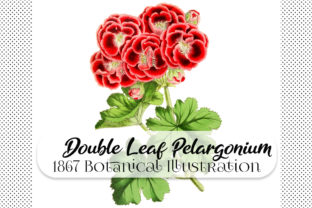
In the realm of digital asset creation and botanical illustration, few resources offer the distinct combination of scientific precision and artistic charm found in Victorian-era floral plates. The Tricolor Leaved Pelargonium Botanical illustration serves as a prime example of this intersection. Sourced directly from an 1867 botanical floral book, this image transcends mere decoration; it represents a specific moment in horticultural history preserved through lithography and engraving. For contemporary designers, educators, and researchers, utilizing such assets requires an understanding of both their historical provenance and their technical adaptation for modern workflows.
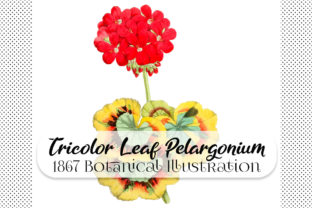
Unlike generic stock photography or AI-generated flora, this specific tricolor-leaved pelargonium illustration carries the weight of authenticity. The original plate was created during a period when botanical art served as the primary method of plant identification and classification before widespread color photography. Today, this asset has been meticulously restored for digital application. The colors have been heightened and brightened to suit modern high-resolution displays and print standards, while retaining the essential line work that defines the species. Furthermore, the image has been professionally cut out, removing the aged paper background to provide a transparent PNG and a clean JPG, making it immediately deployable for creative projects ranging from packaging design to academic presentations.
Botanical Significance and Visual Characteristics
To effectively use the Tricolor Leaved Pelargonium Botanical asset, one must understand the subject matter itself. The pelargonium, often colloquially confused with true geraniums, is a genus within the Geraniaceae family native primarily to Southern Africa. The "tricolor" designation refers to the variegation patterns on the foliage, which typically display zones of green, cream, and sometimes reddish or bronze hues. In the 1867 source material, these variations were rendered by hand-colored lithography, a labor-intensive process that required immense skill to capture the subtle gradients of living tissue.
The visual characteristics of this specific illustration are defined by its vintage rendering style. Viewers will notice that the imperfections in the fine details are not flaws but features. Slight irregularities in the ink distribution, the softness of the petal edges, and the organic asymmetry of the leaves contribute to the vintage character that modern vector art often lacks. These textural nuances provide a tactile quality to digital designs, grounding them in a sense of heritage and craftsmanship. When incorporated into a layout, the heightened colors ensure the plant remains vibrant and legible, while the underlying 19th-century aesthetic adds a layer of sophistication and narrative depth.
Practical Applications Across Creative Disciplines
The versatility of a copyright-free, pre-cut botanical illustration extends far beyond simple scrapbooking. Professionals across various sectors leverage assets like the Tricolor Leaved Pelargonium Botanical to solve specific visual communication challenges. Because this image is free from copyright restrictions and available in isolated formats, it functions as a flexible building block in complex design systems.
- Brand Identity and Packaging: Artisanal brands, particularly those in skincare, tea, and stationery, utilize vintage botanicals to signal natural ingredients and traditional values. The tricolor pelargonium’s intricate leaf pattern suggests complexity and care, making it ideal for premium labeling where generic clip art would diminish perceived value.
- Educational Materials and Textbooks: Educators teaching botany, art history, or Victorian culture require accurate visual aids. This illustration serves a dual purpose: it accurately depicts the morphology of the pelargonium for biology students while simultaneously acting as a primary source artifact for history students studying 19th-century printmaking techniques.
- Digital Content Creation: Bloggers, social media managers, and web designers benefit significantly from the transparent PNG format. The ability to drop a high-quality, isolated flower onto any background color or texture without masking work saves hours of production time. The brightened color profile ensures the image does not look muddy against white web backgrounds or dark mode interfaces.
- Textile and Surface Pattern Design: Surface designers often use vintage florals as focal points in repeating patterns. The unique composition of this 1867 plate provides a non-repetitive, organic anchor point that can be surrounded by complementary geometric elements or other flora to create wallpaper, fabric prints, or wrapping paper designs.
Technical Considerations for Asset Integration
While the aesthetic appeal of the Tricolor Leaved Pelargonium Botanical is immediate, successful implementation depends on technical handling. The provision of both JPG and PNG formats addresses different end-use requirements. Understanding when to deploy each file type is crucial for maintaining image integrity across mediums.
The PNG format is the preferred choice for layered compositions. Because the image has been cut out and saved with transparency, designers can place the pelargonium over textured papers, colored gradients, or photographic backgrounds without carrying over the yellowed tone of the original 1867 book page. This isolation allows for seamless compositing. However, users should be mindful of resolution. Vintage scans intended for print should ideally be used at 300 DPI or higher to preserve the fine stippling and line work characteristic of the era. Upscaling a low-resolution scan can result in pixelation that destroys the delicate vintage texture.
The JPG format serves best for standalone references, archival documentation, or contexts where transparency is unnecessary. JPGs generally offer smaller file sizes, making them suitable for web pages where load speed is a priority, provided the compression artifacts do not obscure the fine botanical details. When using the JPG version in a layout that requires blending, designers may need to employ blend modes such as "Multiply" or "Screen" to integrate the paper texture naturally, whereas the PNG eliminates this step entirely.
Navigating Copyright and Ethical Usage
One of the most significant advantages of utilizing the Tricolor Leaved Pelargonium Botanical from an 1867 source is its public domain status. Works published in the United States before 1929 are generally considered free of copyright protection, allowing for unrestricted commercial and personal use. This legal clarity is vital for business owners and creators who cannot risk infringement claims associated with modern stock imagery.
However, ethical usage involves more than just legal compliance. While the underlying artwork is public domain, specific digital restorations can sometimes carry separate copyrights if they involve significant creative transformation. The version described here has been explicitly designated as copyright-free, with colors heightened and the image cut out for utility. Users should always verify the licensing terms of the specific repository from which they download the asset. Additionally, proper attribution, while not always legally required for public domain works, demonstrates professional integrity and helps preserve the lineage of botanical knowledge. Citing the original 1867 publication in metadata or credits honors the original artists and engravers whose labor made the resource possible.
Preserving the Vintage Aesthetic in Modern Workflows
A common challenge when integrating historical assets like the Tricolor Leaved Pelargonium Botanical into contemporary design is avoiding a disjointed look. The brightened colors and clean cutouts make the image usable, but they can also strip away context if not handled thoughtfully. Designers aiming for a cohesive vintage aesthetic should consider pairing the illustration with appropriate typography and textures.
Typefaces from the same era, such as ornate serifs or early sans-serifs, complement the lithographic style of the pelargonium. Conversely, placing this detailed botanical against a stark, minimalist Swiss-style grid can create a compelling tension between old and new, provided the spacing allows the illustration to breathe. Texture overlays are another effective technique; applying a subtle grain or paper texture over the final composite can unify the crisp digital cutout with other design elements, preventing the flower from appearing as a floating sticker. The goal is to leverage the convenience of the modern digital file while respecting and amplifying the artistic intent of the 1867 original.
The Enduring Value of Botanical Illustration
Beyond its immediate utility as a graphic element, the Tricolor Leaved Pelargonium Botanical represents a broader appreciation for slow, observational art. In an age of instant image generation, the deliberate rendering of a single plant specimen reminds us of the patience required to document the natural world. Each leaf vein and petal fold in this 1867 plate was drawn based on direct observation of a living specimen, capturing biological truths that stylized icons often miss.
For researchers and hobbyists, these illustrations remain relevant data points. They document cultivars that may no longer exist in their exact form due to decades of hybridization and selective breeding. The tricolor variegation depicted in 1867 offers a baseline for comparing historical and modern pelargonium varieties. Thus, when a designer incorporates this image into a project, they are not merely decorating a surface; they are participating in the continued circulation of botanical heritage. The heightened colors and accessible file formats ensure that this heritage remains vibrant and functional, bridging the gap between the dusty shelves of Victorian libraries and the dynamic screens of the digital present.